For Artissima 2026, the new edition of the renowned series of mirrored and shattered floor tiles transforms the courtyard of The Number 6 into an ideal plaza. Curated by Alessandra Siviero and Francesca Canfora, in collaboration with the Tucci Russo Gallery, and with the support of the Building Group.
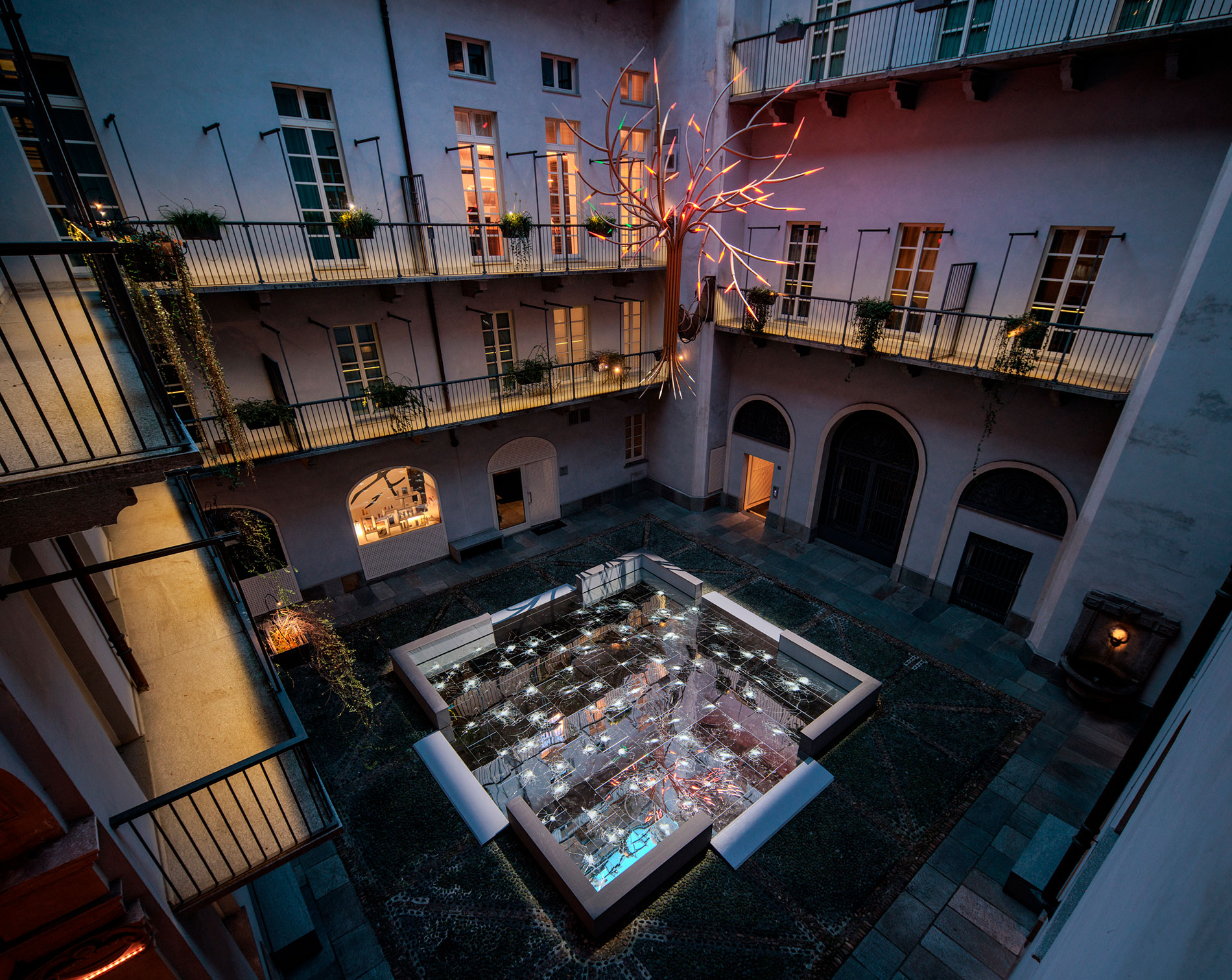
For Artissima 2026, the new edition of the renowned series of mirrored and shattered floor tiles transforms the courtyard of The Number 6 into an ideal plaza. Curated by Alessandra Siviero and Francesca Canfora, in collaboration with the Tucci Russo Gallery, and with the support of the Building Group.
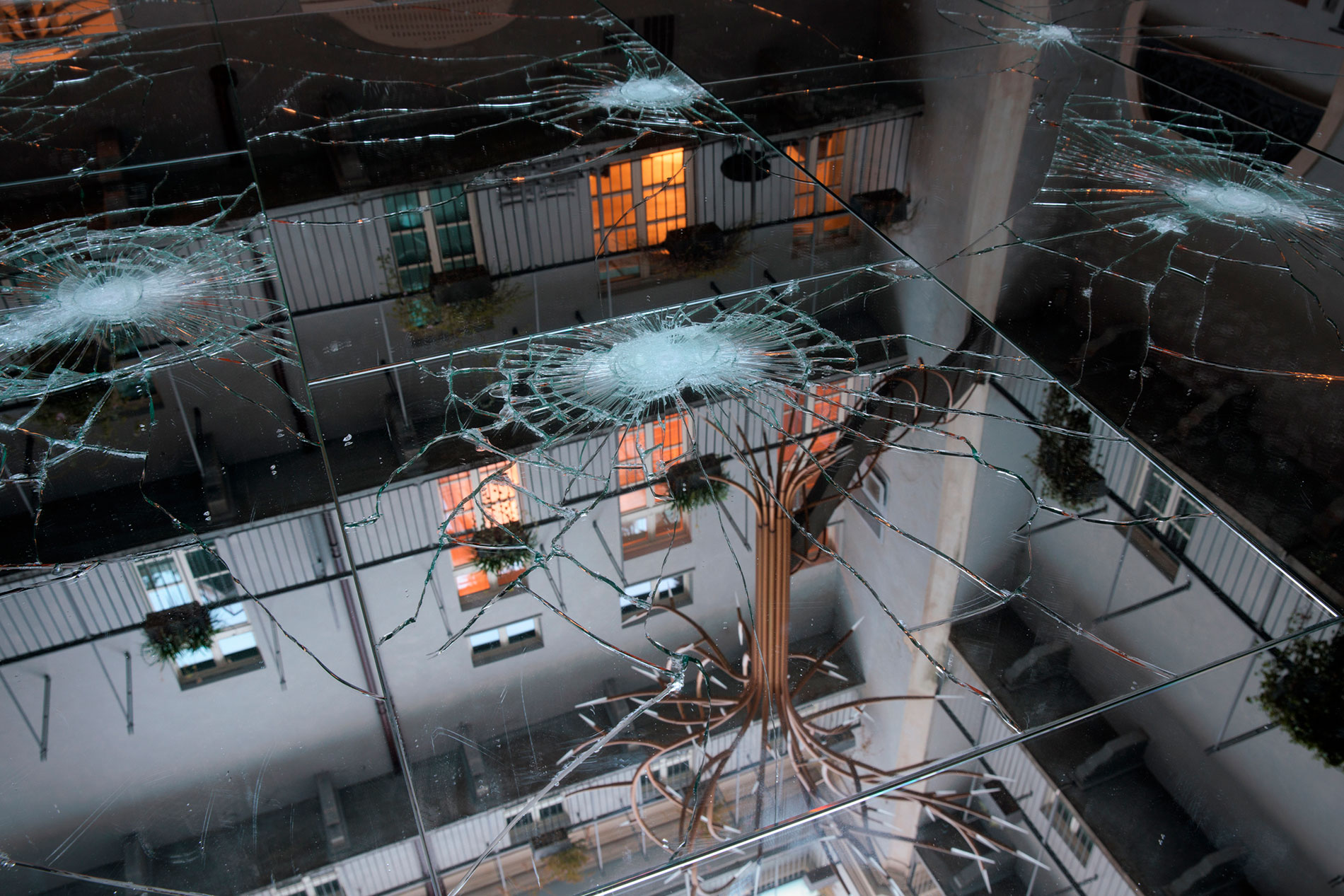
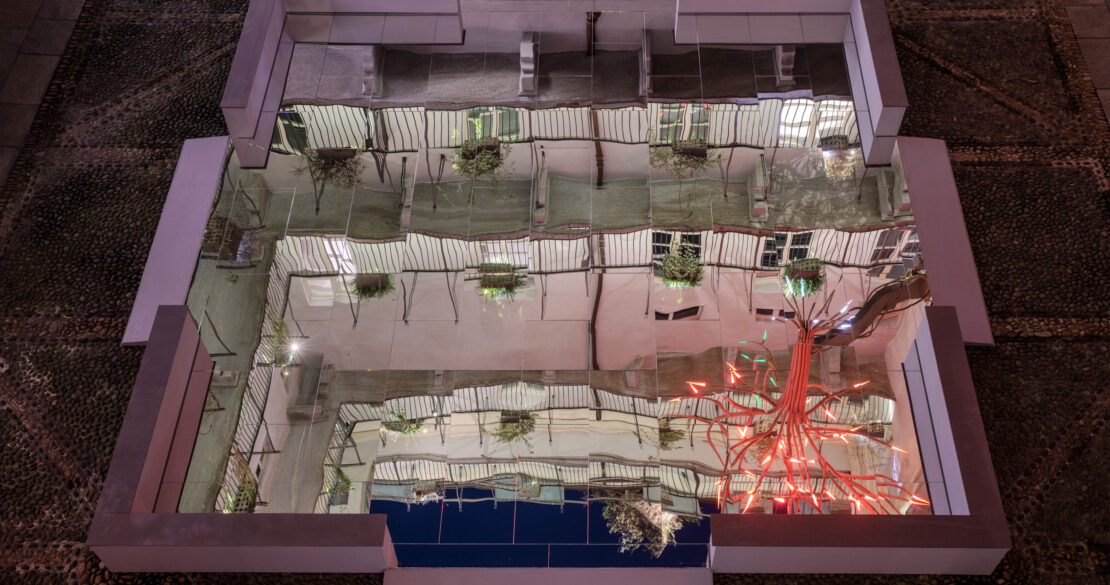
In Pirri’s work, space is a living material and light is the primary structural element, capable of transforming architecture into a place suspended in time. At the center of the courtyard, large slabs of broken mirror—walkable and laid on the ground—reflect the building’s facades and the sky above. The building’s vertical extension thus unfolds in an inverted perspective, where the floor gives way to the sky. The reflection shatters into thousands of fragments and shifts with the light and the movement of people, drawing the gaze toward new and unexpected perspectives. Seating along the perimeter frames this “opening” and evokes an agora: the courtyard becomes an ideal plaza, a public space for gathering, sharing, and encounter.
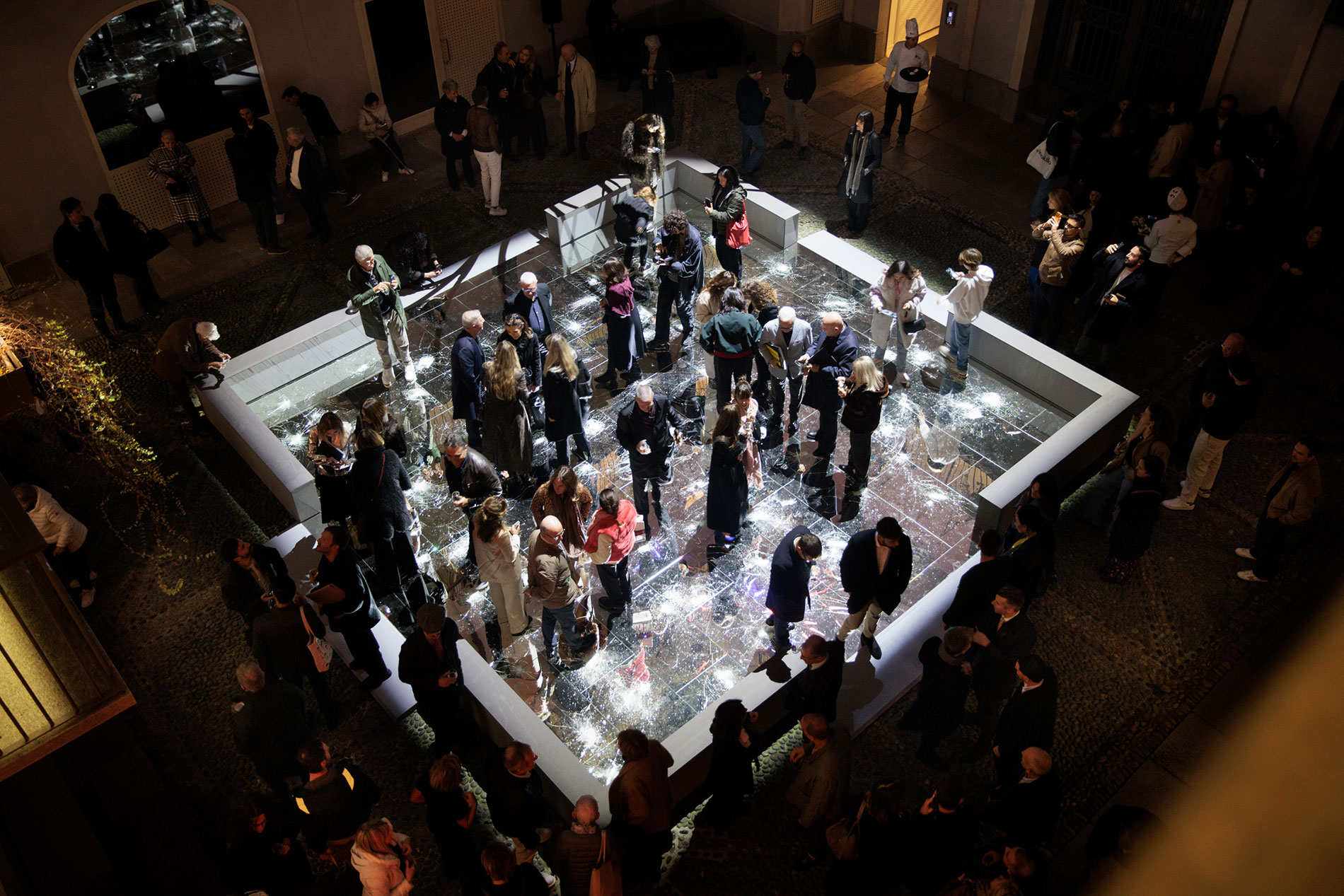
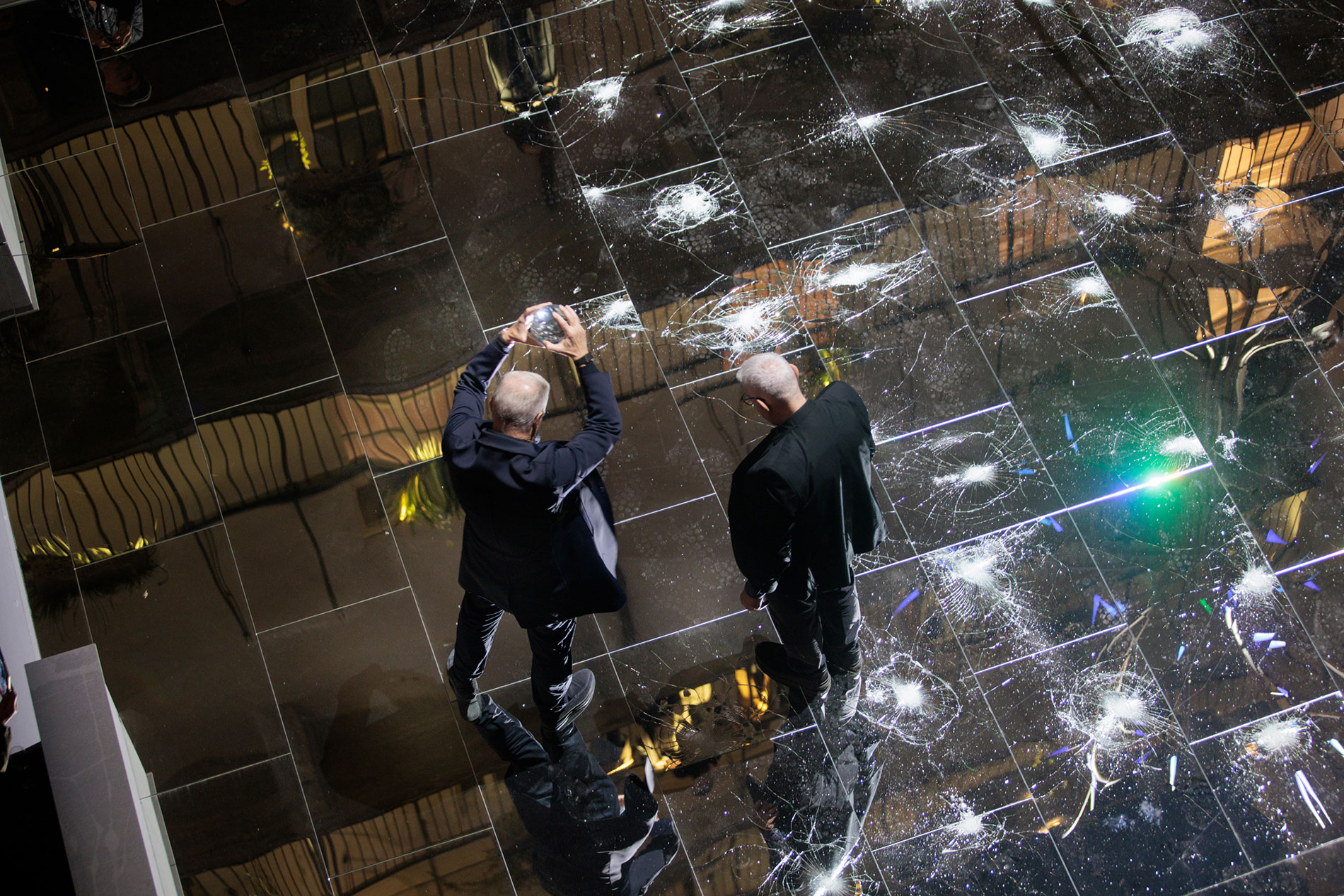
The work is realized when the public walks across it. The observer ceases to be merely an observer and becomes an integral part of the creation and of a collective performance.
“Being inside the artwork distances us from the idea that art presents itself to us as a mirror of the world because, on the contrary, that minuscule, film-like portion of space that separates one’s foot from its double is sufficient to produce a perceptual shift that projects the viewer into the center of a story—a fragmented narrative that nullifies any consolatory participation. A story that celebrates beauty (along with its transience), glory (along with its failure), and desire (along with its loss),” states Alfredo Pirri.
A traveling and site-specific project, Passi reshapes itself each time in dialogue with the venue that hosts it. Over the years, it has been presented in religious buildings such as the Certosa di Padula and the Abbey of Novalesa. It has been presented in museums and archaeological sites such as Palazzo Altemps and the Forum of Caesar in Rome, the Museo Novecento in Florence, and Palazzo Te in Mantua. It has occupied cultural spaces such as the Centro Arti Visive Pescheria in Pesaro, the Chiostro del Bramante, and the Yugoslav Film Archive in Belgrade. Other venues include Palazzo Boncompagni in Bologna and the former Daste and Spalenga thermoelectric power plant in Bergamo, as well as Tito’s former nuclear bunker in Konjic, Bosnia, and the National Gallery of Modern and Contemporary Art in Rome, where her works are on permanent display. The Turin edition also renews the now thirty-year partnership between the artist and the Tucci Russo Gallery, where Pirri held his first exhibition in 1990.
“We have always envisioned The Number 6 as a space open to the city, where historic architecture and contemporary art can engage in dialogue,” says Piero Boffa, President of the Building Group. “With Passi, Alfredo Pirri transforms the courtyard into an ideal public square and restores the building’s public and shared character. Supporting a project of this magnitude, at a time when Artissima brings the international spotlight on contemporary art to Turin, reaffirms our vision of a way of living in which beauty and culture are not mere additions, but an integral part of the project itself.”
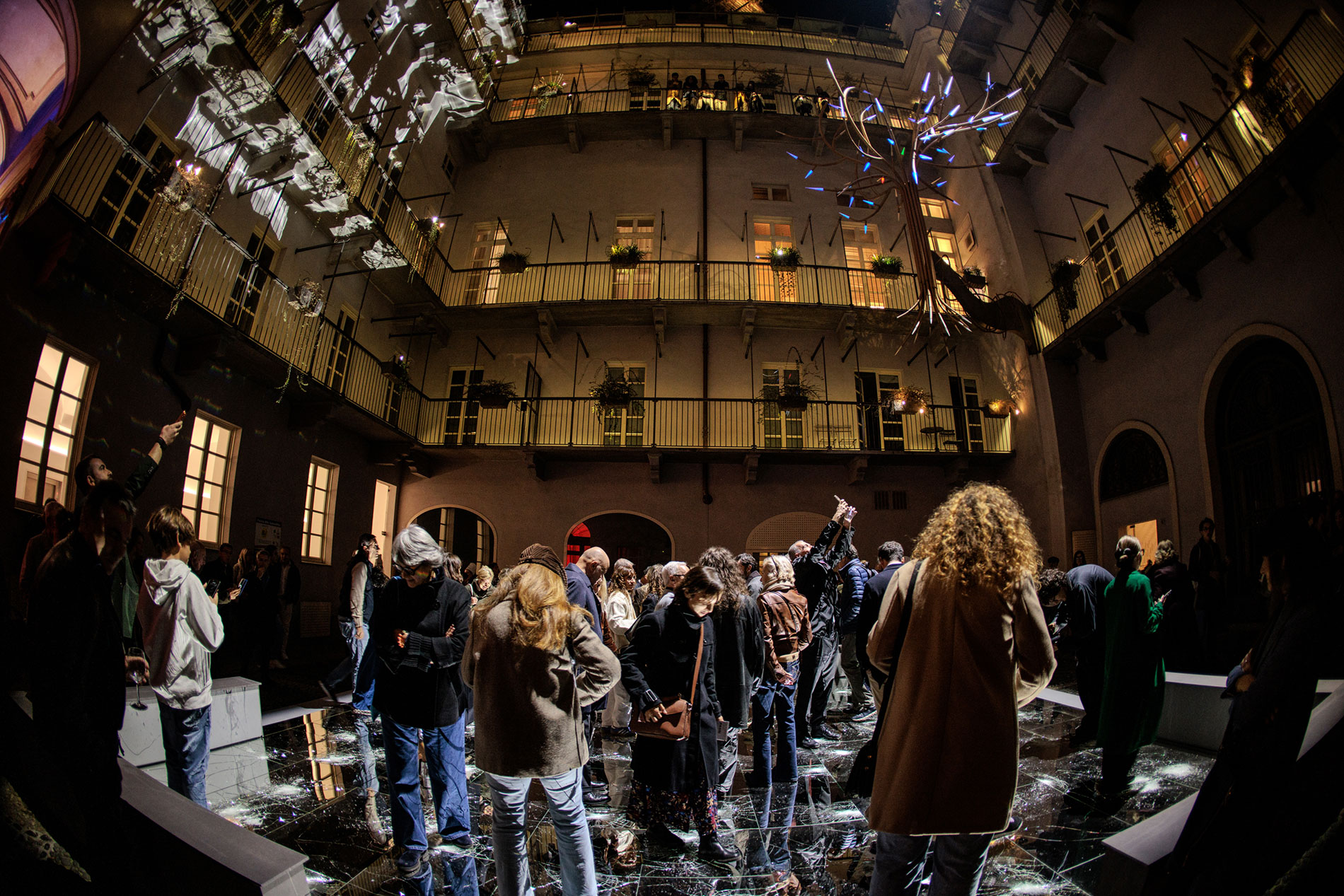
“Pirri works with architecture without adding volume: he inverts it, multiplies it, and presents it to the viewer from a new perspective. In the courtyard at Via Alfieri 6, the artwork does not overlap with the building but reveals its structure, creating a dialogue between the historic facades, the sky, and the figures passing through them. This is how a private space is transformed into a civic space, and how art once again fulfills a public function within architecture,” says Alessandra Siviero, the project’s curator and architect.
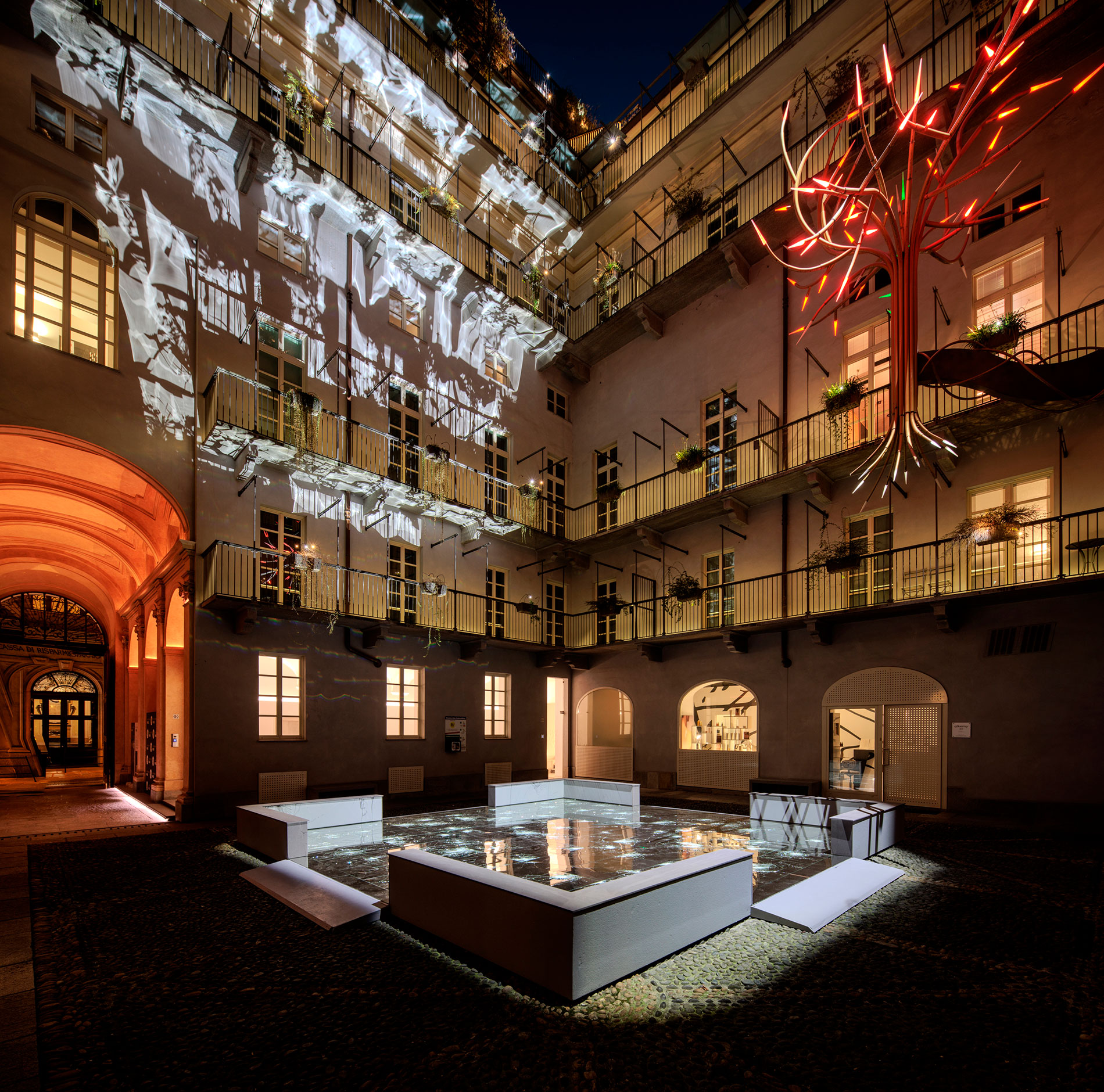
The choice of location is no accident. Built in 1663 by Maurizio Valperga and expanded in 1781 by Michele Luigi Barberis, the former Palazzo Valperga Galleani has been returned to the city as The Number 6. The redevelopment project, designed by Boffa Petrone & Partners for Gruppo Building, won the ArchDaily Building of the Year 2015 award in the Restoration category. Since then, the building has cultivated a cultural identity characterized by the dialogue between historic architecture and contemporary art—a distinctive feature further enhanced by Richi Ferrero’s Vertical Baroque Garden, a striking space that now hosts Pirri’s work, creating a convergence of art, architecture, and landscape.
“Passi asks the public to perform a simple yet unsettling gesture: walking on a surface that is already fractured, which continues to fragment the image of those who cross it. It is in that step that the work is realized, and the viewer becomes the protagonist of a collective narrative,” states Francesca Canfora, curator of the project.
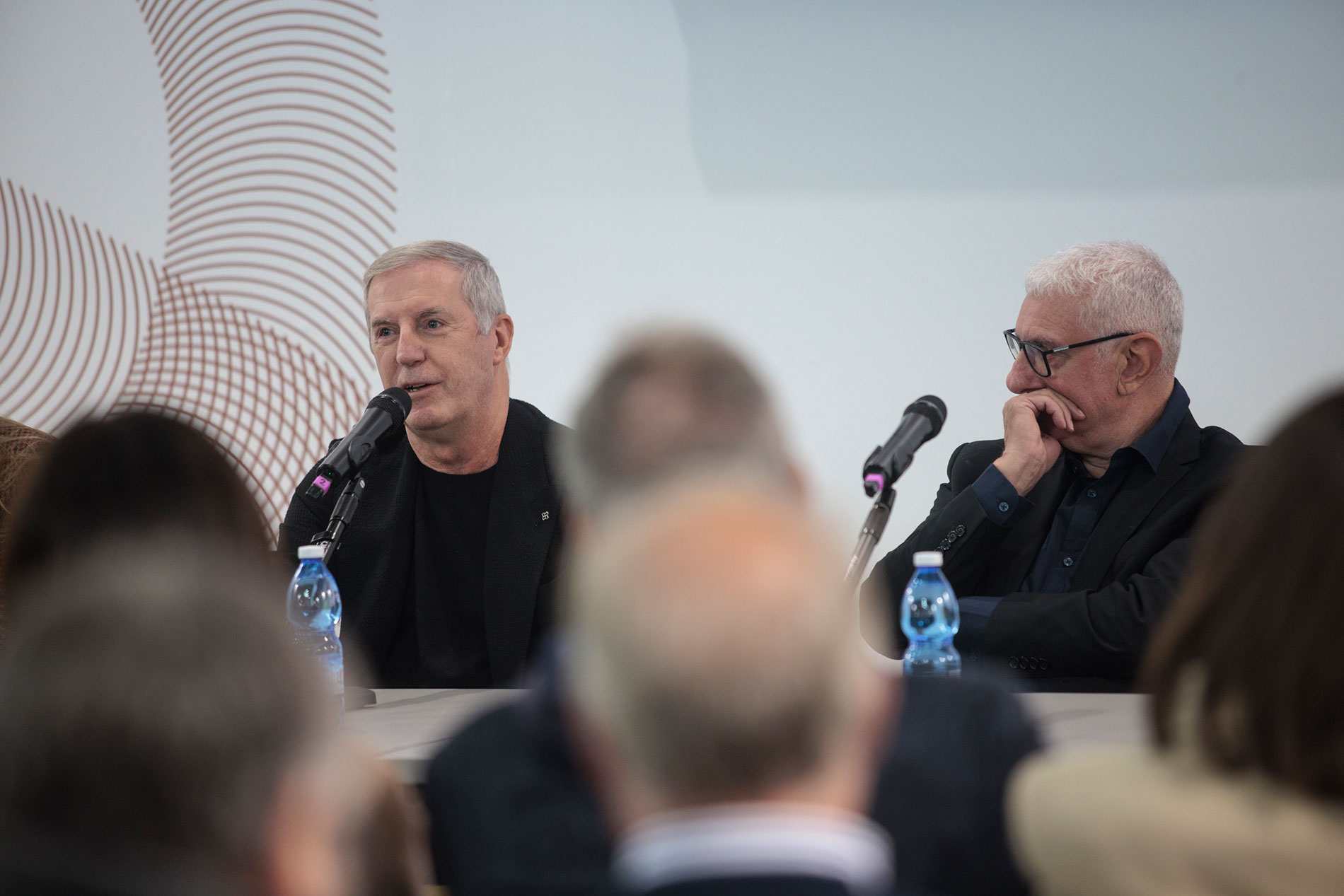
On Sunday, November 1, at 1:00 p.m., within the Artissima exhibition spaces at the Oval Lingotto Fiere, a discussion titled “Art, Architecture, and Commissioning” was held, dedicated to the genesis of the work and the relationship between contemporary creation, built space, and commissioning. Speakers included Alfredo Pirri, artist; Piero Boffa, President of Gruppo Building; Alessandra Siviero, architect and President of the Fondazione per l’Architettura / Torino; and Francesca Canfora, architect and independent curator.
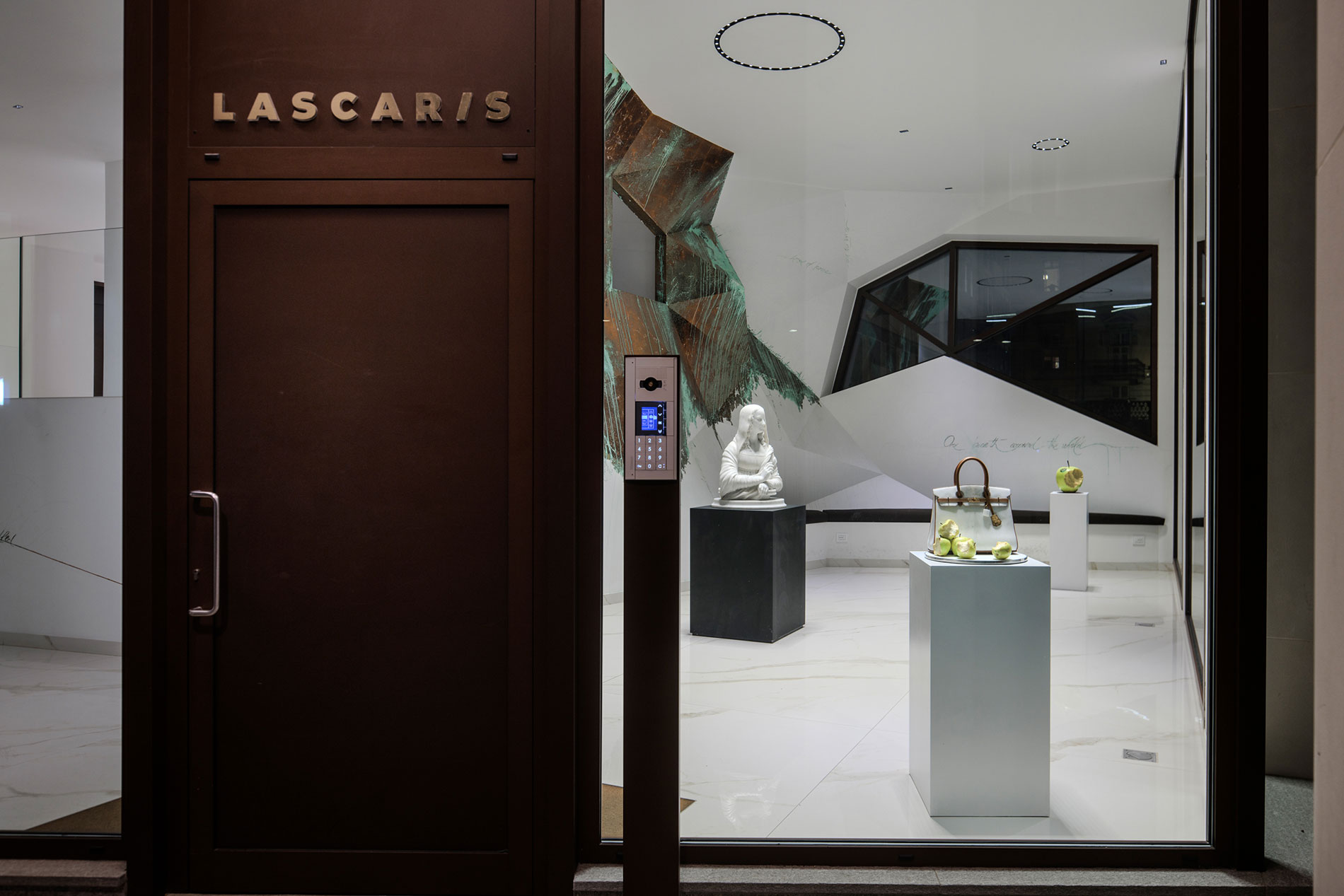
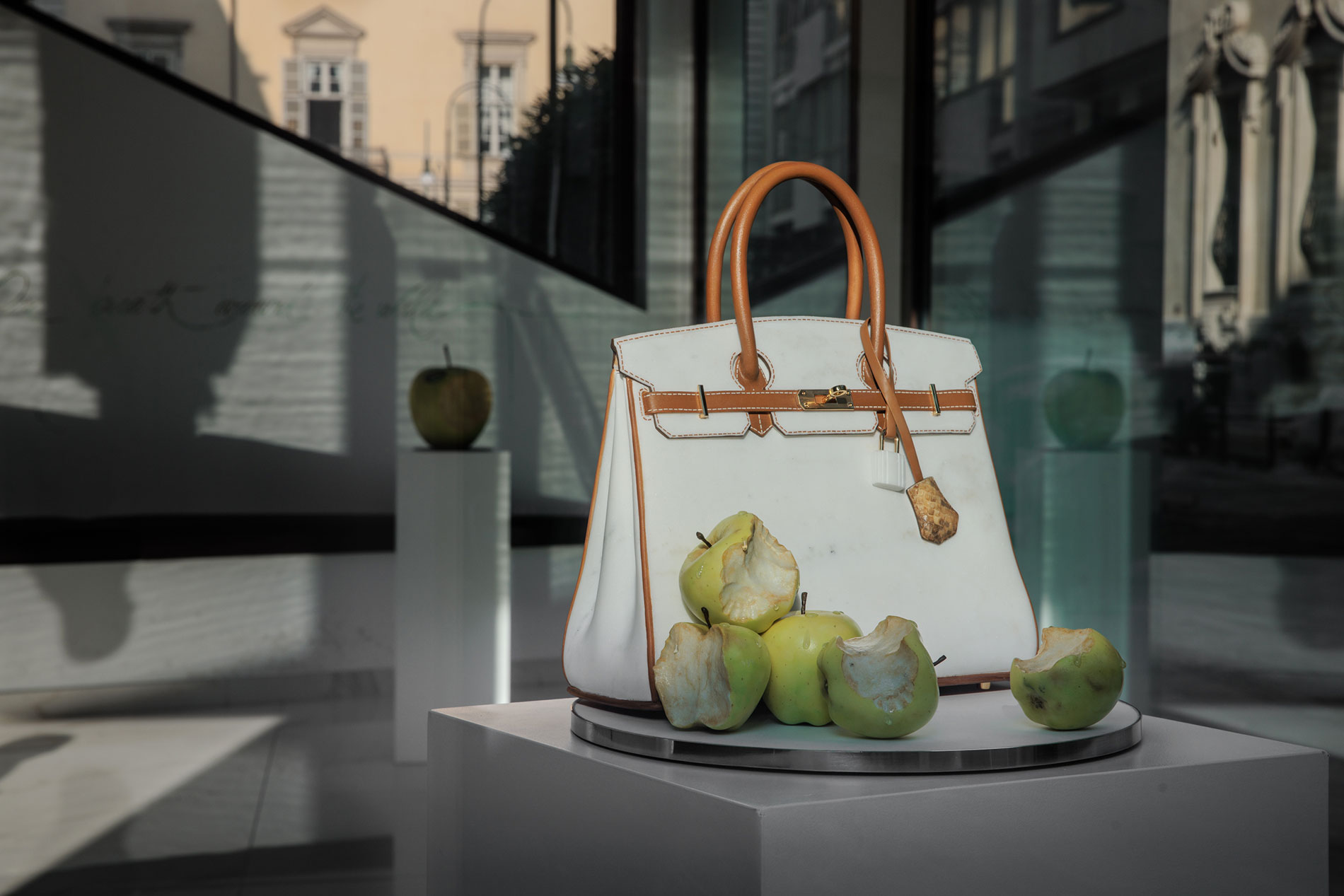
Among the projects supported by the Building Group during this Art Week is Via Marmoris – La via del marmo by sculptor Teo Martino, on view starting October 28 at the Domus Lascaris gallery, located at 7 Via Lascaris.
The building thus reaffirms its role as a space open to contemporary art: in Martino’s work, marble is not merely a material but a tool for understanding. Each piece emerges from the intersection of technical precision and inner exploration, through a slow process of discipline, listening, and transformation—one in which sculpture does not merely represent a subject but reveals the tensions, fragilities, and contradictions of the human experience. Statuary marble is carved to render, with almost illusionistic precision, the texture of objects and icons of our time: from the bags of the Eden collection to Beyond Me, a reinterpretation of the Mona Lisa in Michelangelo white marble.
The common thread linking these two experiences is a unique vision: one in which beauty and culture are integral parts of the design itself. Two buildings in downtown Turin—one Baroque and one Rationalist—open their doors to contemporary art, welcoming visitors to Art Week.